
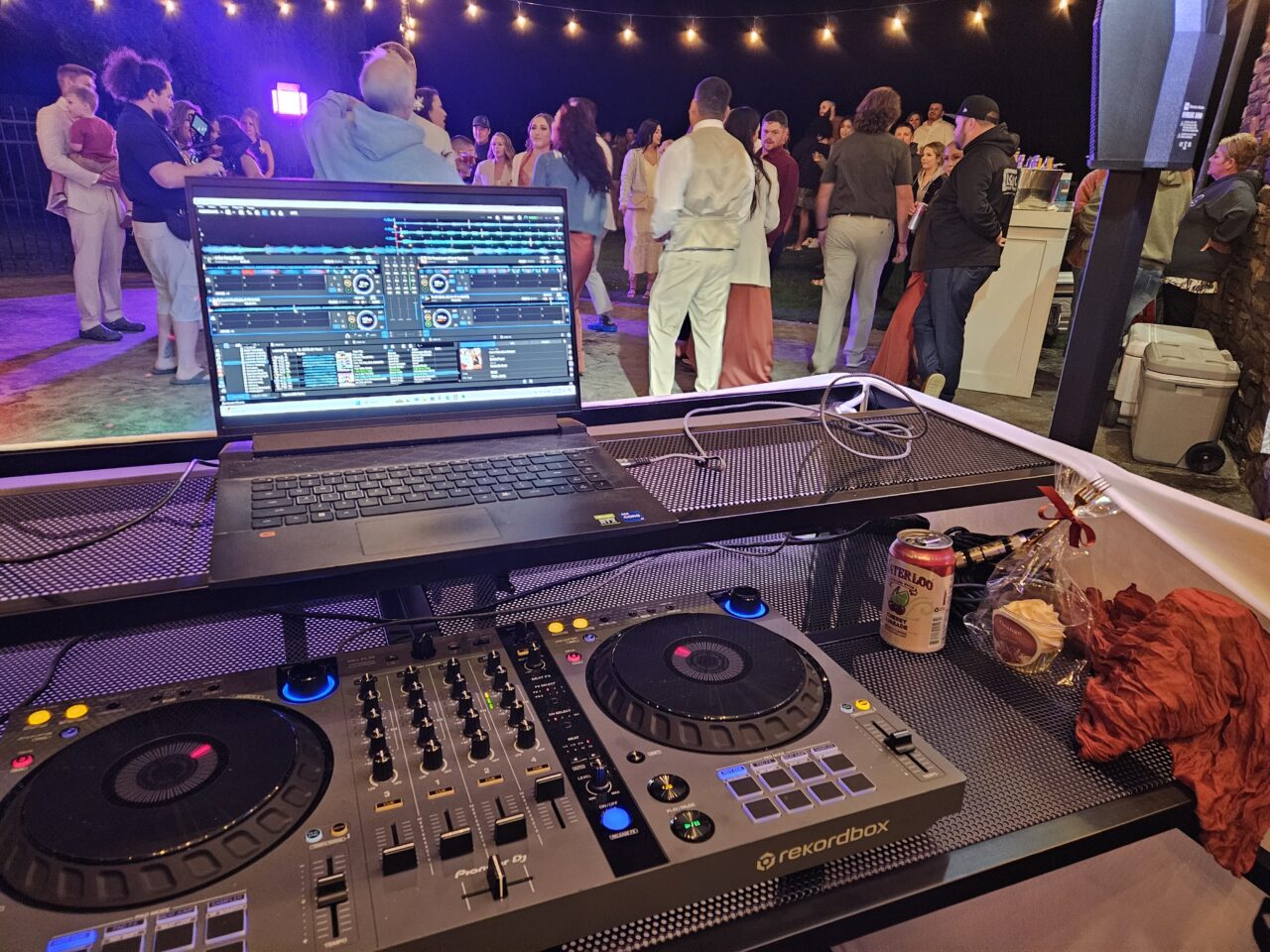
After hundreds of Tri-Cities weddings, I can tell you the single biggest predictor of how your reception will feel: the timeline. Not the menu, not the venue, not the playlist. The timeline.
A good timeline carries energy from the ceremony all the way to the last song. A bad one creates dead air, awkward transitions, and a dance floor that never opens up. This guide is the timeline framework we use with Heat Entertainment Group couples — feel free to steal it.
The big picture: energy curves, not minutes
Most wedding planning timelines obsess over the minute. That's important for vendors, but it misses the point. Reception timing should be designed around energy curves. You want the energy to rise, dip briefly for dinner, then rise again and stay up through the last hour.
If you only remember one thing from this article: never schedule a "low-energy" moment after dinner. Toasts, slideshows, and bouquet tosses should all happen before the dance floor opens, not after. Once the dance floor is open, every interruption kills momentum.
The Heat Entertainment Group standard timeline
This is the template we propose to most couples. Adjust by 10–20 minutes either way depending on your guest count and venue.
Cocktail Hour (60 min)
- Acoustic / lounge playlist at conversational volume
- You and your wedding party take photos
- Guests get drinks, eat appetizers, find their table cards
Grand Entrance (5 min)
- DJ introduces the wedding party, then the couple
- Choose ONE high-energy entrance song for the couple — something instantly recognizable
- Don't drag this out; long entrances kill momentum
First Dance (3–5 min)
- Goes immediately after the entrance while everyone's still standing and watching
- One song is ideal; if it's longer than 4:30 ask your DJ to fade out at 3:30
Welcome Toast + Blessing (5 min)
- Quick welcome from the couple or host, optional blessing, then "please be seated"
Dinner (45–75 min depending on style)
- Sit-down: budget 75 min. Buffet: 45–60 min
- Dinner playlist at low volume — nothing recognizable enough to compete with conversation
- This is when toasts happen — speakers come up one at a time between courses or after main course is served
Cake Cut + Parent Dances (15 min)
- Cake cut is brief (one song)
- Parent dances — one for each parent set — back-to-back keeps energy up
Open Dance Floor (90+ min)
- DJ opens with a guaranteed-floor-filler — something everyone knows and loves
- From here, no scheduled interruptions until the bouquet/garter or last song
Bouquet / Garter (optional, 10 min)
- If you do it, do it about 60 minutes before send-off, NOT in the last 20 minutes
- Keeps the floor full afterward
Last Song + Send-Off (10 min)
- DJ announces the last song 5 minutes before
- Pick a last song that ENDS the night with a feeling, not a fizzle
The 3 worst timeline mistakes I see
1. Late toasts
Toasts after the dance floor opens are momentum killers. Every single time. Get them done at dinner.
2. The slideshow trap
Family slideshows are sweet, but they kill the room when they run during dancing. Run slideshows on a side-screen during cocktail hour or dinner.
3. The 10pm dead zone
If you stop the music for any reason between 9:30 and 10:30 PM, the floor often doesn't come back. People sit down, get drinks, look at phones, decide to leave. Don't break this stretch.
Coordination with your DJ
Your wedding DJ should be able to walk through this timeline with you in your final planning call and flag anything that won't work at your venue. At Heat Entertainment Group we send couples a planning worksheet about 6 weeks before the wedding that covers:
- Must-play songs
- Do-not-play songs
- Special-moment songs (first dance, parent dances, cake cut, last song)
- General vibe per segment
- Names + roles for introductions
If you're booking a Tri-Cities wedding DJ, see the wedding entertainment overview or browse the city pages — Kennewick, Pasco, Richland, Walla Walla, and Prosser. Get a custom quote.